Benchmarking Levels and Classifications: Aligning Data to Estimate Class
Not all benchmarks are equal — the level of detail in a benchmark must match the estimate class being produced. We examine how to align benchmarking data to AACE estimate classification requirements.

The Estimate Class Framework
AACE International Recommended Practice 18R-97 defines five estimate classes for capital projects, ranging from Class 5 (order of magnitude, 0-2% project definition) to Class 1 (definitive, 65-100% project definition). Each class carries defined accuracy ranges and appropriate estimating methodologies. Benchmarking data must be matched to estimate class — using the wrong type of benchmark is a fundamental methodology error.
Class 5: Capacity-Based Curves
At concept screening, capacity-based cost curves are the appropriate benchmarking tool. These express total installed cost as a function of the primary process parameter. Accuracy range: minus 50% to plus 100%.
Class 4: Factored Estimates
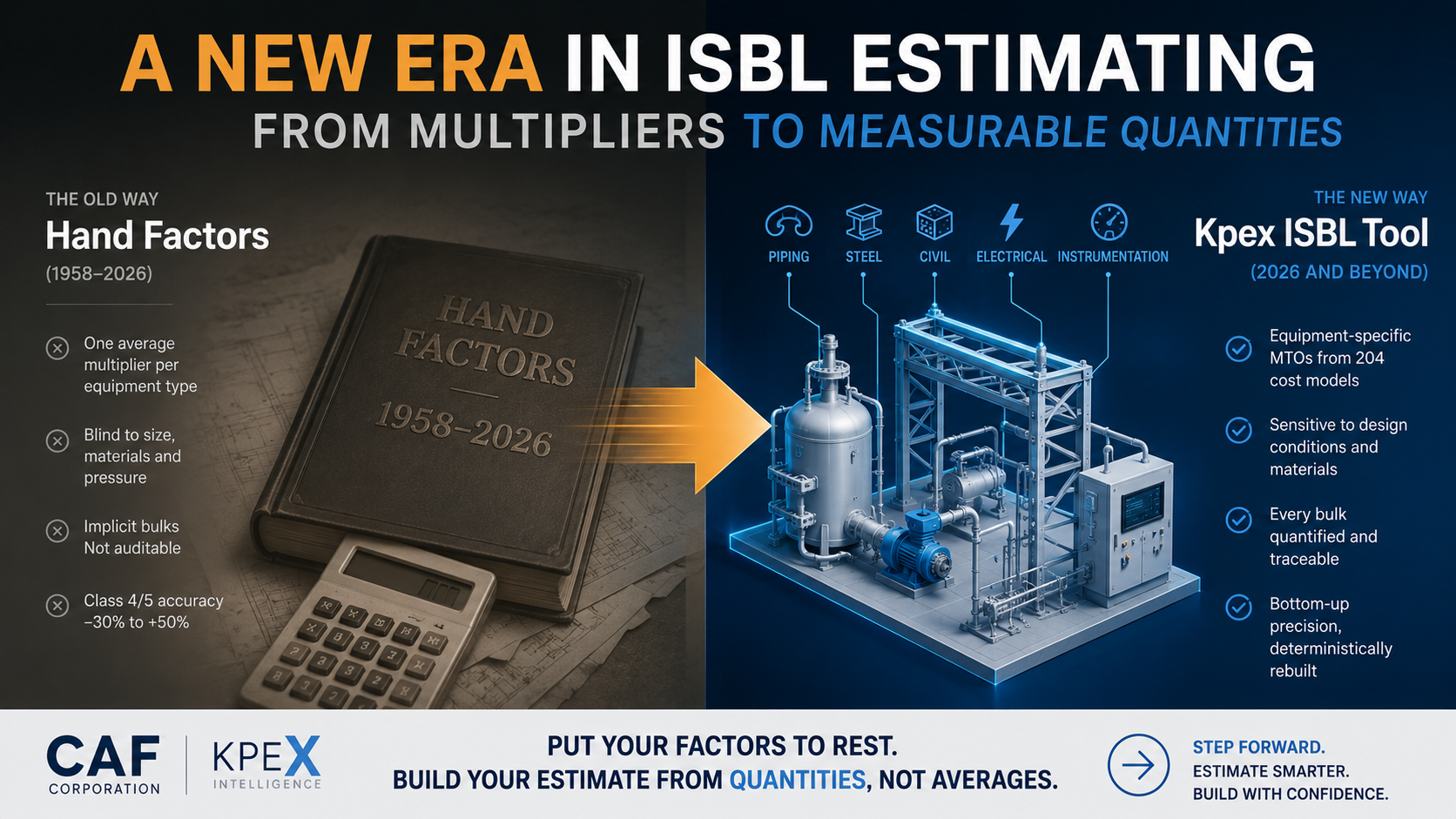
Class 4 estimates use a factored approach — applying discipline ratios and installation factors to purchased equipment costs. Benchmarks include equipment-to-TIC ratios and discipline percentage splits. Accuracy range: minus 30% to plus 50%.
Class 3: Semi-Detailed
Class 3 estimates require equipment-level cost data and discipline-level quantity benchmarks. Unit rate benchmarks for installation labour by discipline become relevant. Accuracy range: minus 20% to plus 30%.
Class 2: Detailed
At Class 2, benchmarking shifts from cost estimation to validation — comparing the developed estimate against benchmarks to identify outliers and areas of potential estimate risk. Accuracy range: minus 15% to plus 20%.
Kpex Across All Classes
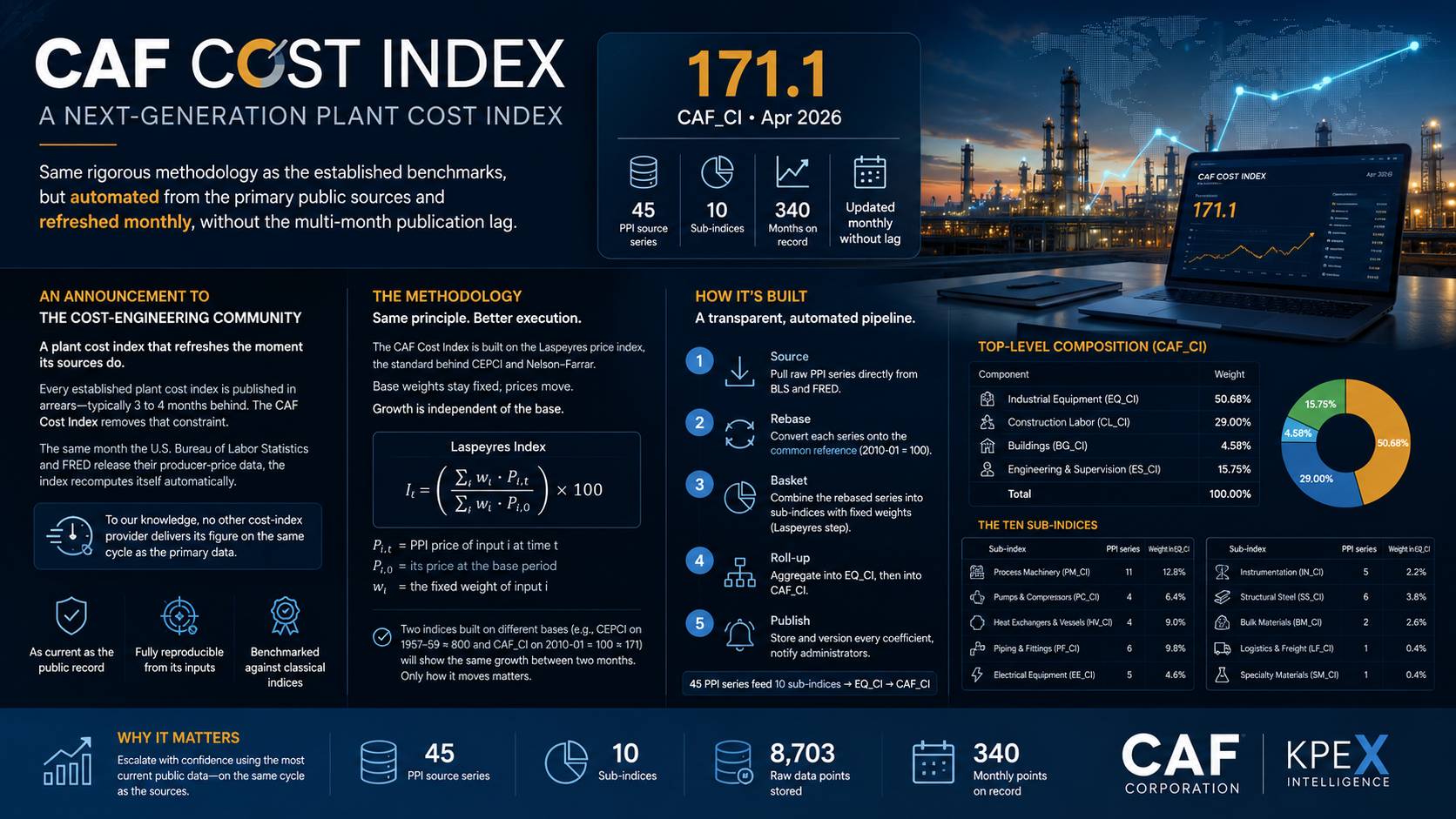
The Kpex platform contains benchmarking data calibrated to all five estimate classes — from capacity-based facility cost curves (Modules B and C) for Class 5-4 estimates through to equipment-level cost models (Module A) and discipline unit rates for Class 3-2 estimates.