Using Cost Benchmarking to Improve Forecast Accuracy on Capital Projects
Benchmarking is not just a validation tool — used correctly, it improves forecast accuracy from gate 1 through to project close-out.

Beyond the One-Time Benchmark
Most organisations use benchmarking as a point-in-time validation exercise — typically at a gate review, when an estimate is challenged. But the highest-performing cost engineering organisations embed benchmarking throughout the project lifecycle.
Gate 1: Concept Screening
At concept screening, capacity-based cost curves — expressed as cost per unit of throughput or installed capacity — allow rapid comparison of alternative configurations and locations. The accuracy of these benchmarks depends entirely on the quality and relevance of the underlying data.
Gate 2: Pre-FEED
At the pre-FEED gate, discipline-level benchmarks become relevant. Ratios of civil to mechanical to electrical to instrumentation CAPEX — expressed as percentages of TIC — can be compared against similar projects to identify outliers and validate the estimate structure.
Gate 3: FEED
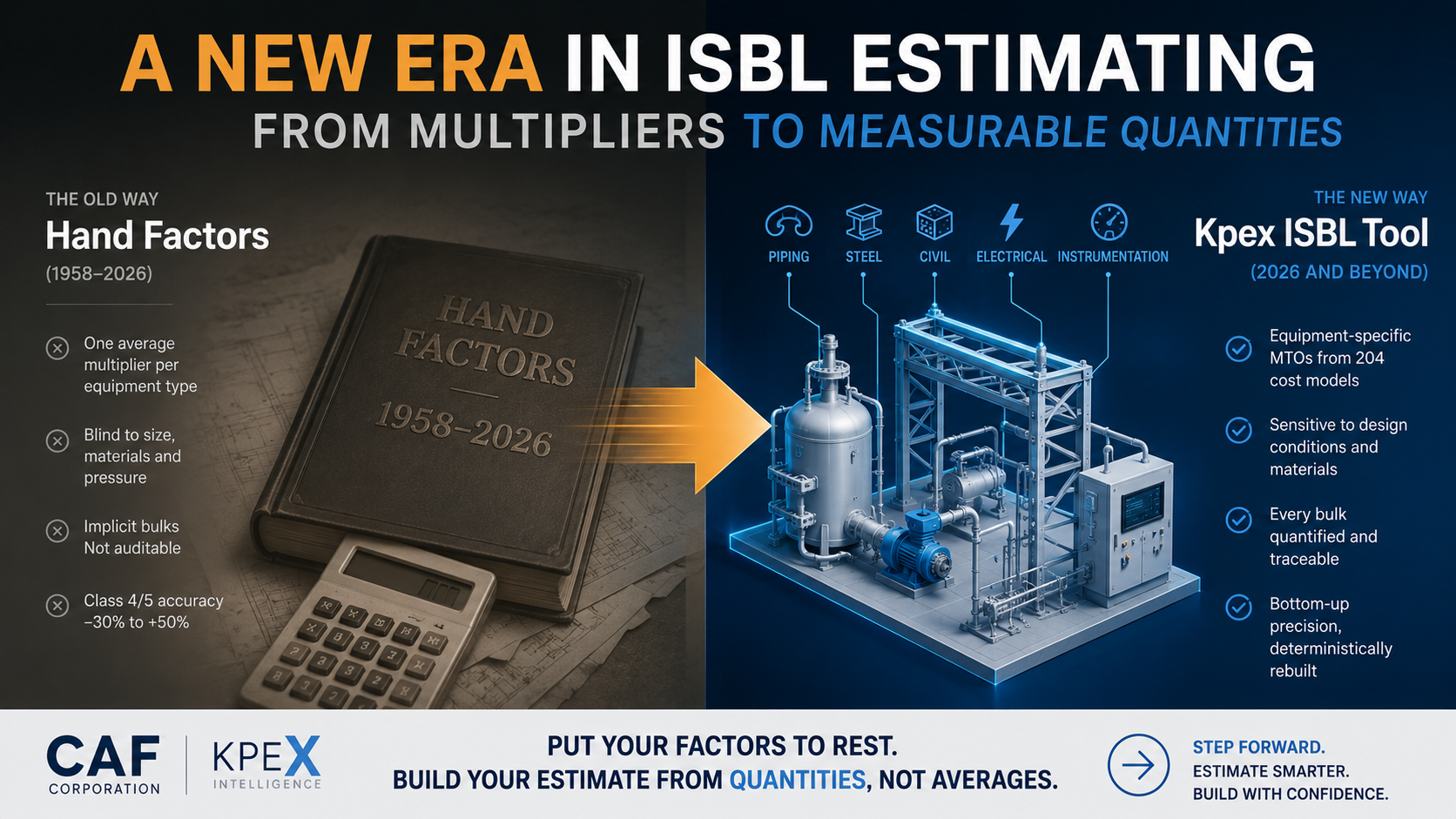
FEED-stage benchmarking focuses on individual equipment and bulk material quantities. Purchased equipment cost per unit and unit rates for installation disciplines can be compared against executed project data to identify specific areas of estimate risk.
Close-Out: The Data Feedback Loop
Close-out benchmarking — comparing the final project cost against the pre-execution estimate and against peer projects — is where the institutional knowledge cycle closes. Organisations that systematically capture close-out data and feed it back into their benchmarking database continuously improve the accuracy of future estimates.